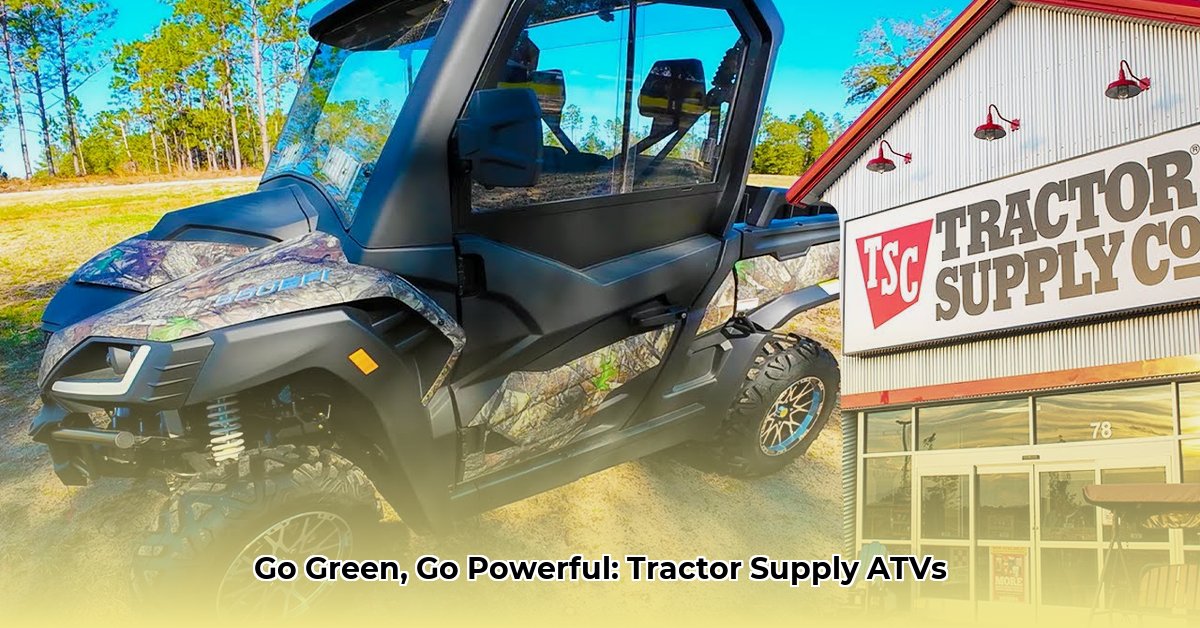
Tractor Supply ATVs and UTVs: A Balancing Act Between Efficiency and Sustainability
Modern farming demands efficiency and sustainability. Tractor Supply's all-terrain vehicles (ATVs) and utility task vehicles (UTVs) offer significant advantages in terms of farm accessibility and task streamlining. However, their environmental impact, particularly fuel consumption and soil compaction, requires careful consideration. This guide explores how to optimize ATV/UTV use for sustainable farming practices. For more information on tires, check out Tractor Supply tires.
Understanding the Environmental Footprint of ATVs and UTVs
Tractor Supply ATVs and UTVs, while extremely useful, contribute to greenhouse gas emissions through fuel consumption and potentially compact soil, hindering plant growth and increasing water runoff. The precise environmental impact varies greatly depending on the model, usage, and terrain. While readily available data on the specific impact of each model isn't exhaustive, ongoing research is gradually clarifying the overall picture. Is the lack of readily available data hindering progress towards sustainable ATV/UTV adoption?
Best Practices for Eco-Friendly ATV/UTV Operation
Minimizing the negative environmental impacts of ATV/UTV use requires a multi-faceted approach.
Optimize Driving Techniques: Smooth acceleration and deceleration significantly reduce fuel consumption, mimicking fuel-efficient driving practices in automobiles. This simple change can yield substantial results.
Prioritize Regular Maintenance: Regular maintenance, including tune-ups and tire pressure checks, extends the lifespan of your ATV/UTV and improves fuel efficiency. A well-maintained machine translates to reduced fuel waste and operational costs. "Regular maintenance is key to maximizing the lifespan and fuel efficiency of your ATV," says Dr. Emily Carter, Agricultural Engineering Professor at Purdue University.
Strategic Tire Selection: Utilizing wider tires and low-impact tires distributes weight more evenly, minimizing soil compaction and ensuring long-term soil health. The initial investment in specialized tires is often offset by the benefits to your soil.
Explore Alternative Fuels: While not yet widely adopted, ongoing research into biofuels and alternative fuels shows promise in significantly reducing the environmental footprint of ATVs and UTVs in the long term.
Stakeholder Perspectives and Responsibilities
Sustainable farming with ATVs requires a collaborative effort. Each stakeholder group bears responsibility in fostering greener practices.
| Stakeholder | Short-Term Actions | Long-Term Strategies |
|---|---|---|
| Farmers/Ranchers | Implement efficient driving techniques, regular maintenance, and consider specialized tires. | Invest in research and development of sustainable technology and advocate for supportive policies. |
| Agricultural Researchers | Conduct studies quantifying the environmental impact of different ATV/UTV models and usage. | Develop comprehensive best-practice guidelines and promote eco-friendly ATV/UTV design improvements. |
| Manufacturers | Design ATVs/UTVs with improved fuel efficiency and reduced emissions. | Invest heavily in R&D for electric and alternative fuel vehicles and promote sustainable practices. |
| Government Agencies | Offer financial incentives (tax breaks, subsidies) for sustainable ATV/UTV adoption. | Implement regulations promoting environmentally responsible ATV/UTV use and sustainable infrastructure. |
The Promise of Electric ATVs: A Greener Future
Electric ATVs (eATVs) and eUTVs offer a significant opportunity to reduce the environmental impact of agricultural operations. While initial costs remain higher and battery technology continues to evolve, several advances make them a compelling investment. Increased battery life and decreased charging times improve practicality, making them a viable alternative.
Addressing the Challenges of Electric ATV Adoption
The transition to a greener farming future through electric ATVs is not without its hurdles. Current battery technology may not fully meet the demands of a full workday. The lack of rural charging infrastructure also poses difficulties while regulatory frameworks and safety standards are still evolving.
A Step-by-Step Plan for Sustainable ATV/UTV Adoption
Boost R&D investment: Manufacturers must improve battery technology, including range, charging speed, and overall durability. (Efficacy metric: Aim for a 20% increase in battery life within the next 5 years.)
Develop attractive incentives: Governments should offer financial incentives (tax credits, subsidies) to make eATVs more affordable for farmers. (Efficacy metric: Target a 30% reduction in ownership cost.)
Build rural charging networks: Cooperative initiatives and public-private partnerships are needed to expand charging infrastructure in rural areas. (Efficacy metric: Aim for nation-wide rural charging station availability within 10 years.)
Invest in education and training: Farmers require education on the benefits and best practices of eATV use. This should include safety training and responsible operation protocols.
Promote sustainable practices: Beyond the transition to electric, sustainable driving practices, regular maintenance and careful tire selection are still essential for minimizing environmental impact.
Conclusion: Towards Sustainable Farming Practices
The successful integration of ATVs and UTVs into sustainable farming requires a multifaceted approach. By prioritizing thoughtful technology choices, efficient operating practices, and strategic collaboration among stakeholders, farmers can harness the power of these machines while safeguarding the environment. This will ultimately ensure a cleaner, more profitable, and more sustainable agricultural landscape for future generations.